中央研究院院士 · 2010 當選Academician of Academia Sinica · Elected 2010

王陸海Lu-Hai Wang

LU-HAI WANG王陸海

中央研究院院士|中國醫藥大學特聘講座教授中醫藥研究中心主任|國家衛生研究院名譽研究員 Academician, Academia Sinica · Distinguished Chair Professor, China Medical University · Director, Chinese Medicine Research Center · Investigator Emeritus, NHRI

從致癌基因到腫瘤微環境——探索癌症轉移機制,推動中西醫結合轉譯。 From oncogenes to the tumor microenvironment — decoding metastasis and enabling translational cancer medicine.

2010
中央研究院院士
生命科學組 · 第 28 屆
Academician, Academia Sinica
Life Sciences, 28th convocation
2012
世界科學院
TWAS Fellow
Fellow, The World
Academy of Sciences
150
學術論文
D-index ≈ 53
Publications
D-index ≈ 53
8,390+
總引用數
單篇最高 ≈ 719
Total citations
Top paper ≈ 719

*引用與篇數為公開資料庫(Research.com/Google Scholar)快照,隨時間變動。* Citation figures are snapshots of public databases (Research.com / Google Scholar) and change over time.

關於院士About

從致癌基因革命到轉移生物學From the Oncogene Revolution to Metastasis Biology

王陸海院士為美國加州大學柏克萊分校分子生物學博士,曾任洛克斐勒大學教職及紐約西奈山醫學中心微生物學系、癌症中心與腫瘤科學系終身教授。2008 年以國家衛生研究院分子與基因醫學研究所特聘研究員兼所長身分返台,並曾任國衛院代理院長、副院長。2010 年當選中央研究院院士,2012 年當選世界科學院(TWAS)院士。專長為癌症生物學、細胞轉化與訊息傳導;近年聚焦腫瘤微環境、癌症轉移、癌幹細胞與中西醫結合之抗癌策略,2017–2025 年擔任中國醫藥大學副校長,現任中國醫藥大學中西醫結合研究所特聘講座教授及中醫藥研究中心主任。

Dr. Lu-Hai Wang is an Academician of Academia Sinica (elected 2010) and a Fellow of The World Academy of Sciences (TWAS, 2012). He earned his Ph.D. in Molecular Biology from the University of California, Berkeley, trained with Peter Duesberg and later with Hidesaburo Hanafusa at Rockefeller University, and served as a tenured professor at the Icahn School of Medicine at Mount Sinai. Since returning to Taiwan in 2008, he has led the Institute of Molecular and Genomic Medicine at the National Health Research Institutes and served as NHRI Acting President and Vice President. His research spans oncogenes, receptor tyrosine kinase signaling, cancer metastasis, microRNAs, the tumor microenvironment, and translational strategies including herbal and antibody therapeutics. He served as Vice President of China Medical University (2017–2025) and is now Distinguished Chair Professor at the Graduate Institute of Integrated Medicine and Director of its Chinese Medicine Research Center.

師承鏈:Peter Duesberg(病毒 RNA 遺傳學)→ 花房秀三郎 Hidesaburo Hanafusa(致癌基因)→ 獨立實驗室(ros/受體 PTK/轉移),直接站在 1970–80 年代「致癌基因革命」核心實驗室鏈上。

Lineage: Peter Duesberg (viral RNA genetics) → Hidesaburo Hanafusa (oncogenes) → independent laboratory (ros / receptor PTK / metastasis) — squarely within the core laboratory chain of the 1970s–80s “oncogene revolution.”

近期焦點Spotlight
「看見典範——臺灣科研創新與成就」特展現場:大螢幕展示臺灣代表性科學家群像,王陸海院士於舞台側留影
2026-07

「看見典範——臺灣科研創新與成就」特展Meeting the Paradigm: Taiwan’s Scientific Innovation & Achievements

國立自然科學博物館特展(2026.07.01–08.30,必可飛劇場):王陸海院士獲選為臺灣科研典範人物之一,與多位代表性科學家並列展出,院士並親臨現場分享研究歷程。At the National Museum of Natural Science special exhibition (Jul 1 – Aug 30, 2026), Academician Wang is featured among Taiwan’s paradigm-setting scientists, and appeared in person to share his research journey.

地點:國立自然科學博物館Venue: National Museum of Natural Science, Taichung
1966–1970
國立臺灣大學 動物學系 學士B.S., Zoology, National Taiwan University
1969 書卷獎;兼修化學訓練Book Award, 1969; additional chemistry training
1971–1976
UC Berkeley 分子生物學博士Ph.D., Molecular Biology, UC Berkeley
Peter H. Duesberg 實驗室——RNA 腫瘤病毒遺傳結構與酵素學Peter H. Duesberg lab — RNA tumor virus genetic structure and enzymology
1977–1979
洛克斐勒大學 博士後研究Postdoctoral Fellow, Rockefeller University
花房秀三郎(Hidesaburo Hanafusa)——禽肉瘤病毒重組與轉形基因起源Hidesaburo Hanafusa lab — avian sarcoma virus recombination and the origin of transforming genes

職涯時間軸Career Timeline

1979–1988
洛克斐勒大學 助理教授 → 副教授Assistant → Associate Professor, Rockefeller University
病毒與細胞致癌基因、病毒 RNA 轉錄加工、生長因子受體轉形潛力Viral and cellular oncogenes, viral RNA processing, growth-factor receptor transforming potential
1988–2009
西奈山醫學中心 副教授 → 終身教授Associate → Tenured Professor, Mount Sinai School of Medicine
微生物學系主聘;1999–2004 Ruttenberg 癌症中心教授;2004–2009 腫瘤科學系教授Dept. of Microbiology; joint appointments at Ruttenberg Cancer Center (1999–2004) and Oncological Sciences (2004–2009)
2008–2017
國衛院分子與基因醫學研究所 特聘研究員兼所長Distinguished Investigator & Director, Institute of Molecular and Genomic Medicine, NHRI
返台建立轉移與 miRNA 研究團隊Returned to Taiwan; built the metastasis and microRNA research program
2012–2014
國衛院 代理院長 → 副院長Acting President → Vice President, NHRI
2012.09–12 代理院長;2012.12–2014.07 副院長;此前曾代理副院長與免疫醫學研究中心主任Acting President (Sep–Dec 2012); Vice President (Dec 2012–Jul 2014); previously Acting VP and Acting Director of the Immunology Research Center
2017–2025
中國醫藥大學 副校長Vice President, China Medical University
兼中醫藥研究中心主任與講座教授;合聘於臺大、清大、陽明交大、中央大學Also Director of the Chinese Medicine Research Center and Chair Professor; joint appointments at NTU, NTHU, NYCU and NCU
2025 —
中國醫藥大學 中西醫結合研究所 特聘講座教授Distinguished Chair Professor, Graduate Institute of Integrated Medicine, CMU
兼中醫藥研究中心主任;國衛院名譽研究員Also Director of the Chinese Medicine Research Center; Investigator Emeritus at NHRI

榮譽與獎項Honors & Awards

2010 中央研究院院士2010 Academician, Academia Sinica 2012 TWAS Fellow2012 TWAS Fellow 2025 大台中好人好事生涯典範獎2025 Taichung Good People & Good Deeds Lifetime Model Award 1979–84 NIH 研究職涯發展獎1979–84 NIH Research Career Development Award 2010–14 細胞及分子生物學學會理事長2010–14 President, CSCMB 2013 乳癌傑出研究獎2013 Breast Cancer Research Award 1998 北京協和醫學院榮譽教授1998 Honorary Professor, Peking Union Medical College 1977 Damon Runyon–Walter Winchell 博士後獎助1977 Damon Runyon–Walter Winchell Fellowship 1969 臺大書卷獎1969 NTU Book Award
研究領域Research

解碼癌症轉移,推動轉譯醫學Decoding Metastasis, Enabling Translational Medicine

探討乳癌、卵巢癌、口腔癌、肺癌與前列腺癌生長與轉移之細胞與分子基礎,著重腫瘤—基質交互作用、癌幹細胞、轉移抑制因子(含 microRNA),以及診斷、預後與治療介入之生物標記。Exploring the cellular and molecular basis of tumor growth and metastasis in breast, ovarian, oral, lung and prostate cancers — with emphasis on tumor–stroma interactions, cancer stem cells, metastasis suppressors (including microRNAs), and biomarkers for diagnosis, prognosis and therapeutic intervention.

01

腫瘤微環境與癌症轉移Tumor Microenvironment & Metastasis

以高低轉移同源細胞株、同系/異種移植小鼠與臨床檢體,解析 STAT3–Twist–AKT2、Vav3–Rac1 與 CTH–H₂S 等訊息軸如何驅動侵襲與遠端轉移。Using isogenic high/low-metastatic cell pairs, syngeneic and xenograft mouse models, and clinical specimens to dissect how STAT3–Twist–AKT2, Vav3–Rac1 and CTH–H₂S signaling axes drive invasion and distant metastasis.

02

microRNA 與生物標記microRNAs & Biomarkers

發現 miR-149、miR-491-5p(標靶 GIT1)、miR-138(SOX4/HIF-1α)與糖皮質激素誘導之 miR-708(Rap1B)等轉移抑制 microRNA,發展診斷與預後標記。Discovering metastasis-suppressing microRNAs — miR-149 and miR-491-5p (targeting GIT1), miR-138 (SOX4 / HIF-1α), and glucocorticoid-induced miR-708 (Rap1B) — toward diagnostic and prognostic biomarkers.

03

癌幹細胞、抗藥與復發Cancer Stem Cells, Resistance & Relapse

探討癌幹細胞在化療抗性(如 paclitaxel 抗性之 Twist–AKT2 機制)與復發中的角色,尋找可介入的弱點。Investigating the role of cancer stem cells in chemoresistance — including the Twist–AKT2 mechanism of paclitaxel resistance — and relapse, seeking actionable vulnerabilities.

04

中草藥、抗體與免疫調控轉譯Herbal, Antibody & Immune-Modulating Translation

結合中醫藥研究中心平台,評估植物藥與抗體療法對腫瘤微環境之免疫調控,推動中西醫結合抗癌策略與新藥開發。Leveraging the Chinese Medicine Research Center to evaluate botanicals and antibody therapeutics for immune modulation of the tumor microenvironment, advancing integrative anticancer strategies and drug development.

研究演進三階段Three Phases of Research

1970s · 階段 A1970s · Phase A

RNA 腫瘤病毒基因定位RNA Tumor Virus Gene Mapping

以 RNase T1 抗性寡核苷酸圖譜定位 RSV 等禽腫瘤病毒之肉瘤/外套膜特異序列,參與病毒重組與基因圖譜經典工作。Mapped sarcoma- and envelope-specific sequences of avian tumor viruses using RNase T1-resistant oligonucleotide fingerprinting; classic work on viral recombination and gene mapping.

1980s–2000s · 階段 B1980s–2000s · Phase B

ros/受體 PTK 與訊息路徑ros / Receptor PTK Signaling

UR2 之 ros 序列與轉形蛋白、人類 c-ros-1 跨膜受體樣分子、IGF–STAT3、RACK1、Vav3——最清晰的功能軸為 STAT3 → Twist → AKT2。The ros sequence and transforming protein of UR2, the human c-ros-1 receptor-like molecule, IGF–STAT3, RACK1 and Vav3 — crystallized in the STAT3 → Twist → AKT2 functional axis.

2008 迄今 · 階段 C2008–present · Phase C

轉移、miRNA、微環境與轉譯Metastasis, miRNA, Microenvironment & Translation

橫跨乳、卵、口、肺、前列腺癌;目標是機制解析 + 預後 biomarker + 介入假說。Spanning breast, ovarian, oral, lung and prostate cancers — aiming at mechanism, prognostic biomarkers and testable intervention hypotheses.

近期研究亮點Recent Research Highlights

CD24 免疫檢查點抗體(HH0146)CD24 Immune-Checkpoint Antibody (HH0146)

2015 年發現癌細胞表面分子 CD24 與乳癌進展及肺、淋巴轉移相關,2018 年率先發表 CD24 調控乳癌生長與轉移之研究。其後成功開發人源化 CD24 單株抗體「HH0146」,可活化巨噬細胞吞噬癌細胞、逆轉腫瘤免疫抑制微環境,於動物模型中顯著抑制三陰性乳癌生長與遠端轉移,榮獲「2025 未來科技獎」,並獲國科會推薦為重點推廣亮點技術,正朝新藥臨床試驗(IND)目標推進。Identified the surface molecule CD24 as linked to breast cancer progression and lung/lymph-node metastasis (2015), publishing the first study on CD24-driven tumor growth and metastasis in 2018. The team subsequently developed the humanized anti-CD24 monoclonal antibody HH0146, which reactivates macrophage phagocytosis of cancer cells and reverses the immunosuppressive tumor microenvironment, significantly suppressing triple-negative breast cancer growth and distant metastasis in animal models. The technology received the 2025 Future Tech Award and was selected by NSTC as a featured highlight, and is advancing toward IND-enabling studies.

癌幹細胞調控(EDIL3/Themis2)Cancer Stem-Cell Regulation (EDIL3 / Themis2)

癌幹細胞僅佔腫瘤約 1–2%,卻是化療後復發與轉移的根源。團隊發現 EDIL3 為調控癌幹細胞的關鍵分子,與化療抗藥性密切相關,現正開發 EDIL3 單株抗體,作為抑制三陰性乳癌與卵巢癌復發之抗體新藥候選;另以 Themis2 為治療標的,探討克服三陰性乳癌抗藥性及復發的策略。Cancer stem cells comprise only ~1–2% of a tumor yet drive post-chemotherapy relapse and metastasis. The team identified EDIL3 as a key regulator of cancer stemness linked to chemoresistance, and is developing an anti-EDIL3 monoclonal antibody as a candidate therapeutic against triple-negative breast and ovarian cancer recurrence. Themis2 is also being pursued as a therapeutic target to overcome drug resistance in triple-negative breast cancer.

癌細胞代謝重塑(TKT/α-KG)Cancer Metabolic Reprogramming (TKT / α-KG)

發現葡萄糖代謝酶「轉酮醇酶」(Transketolase, TKT)隨腫瘤長大而增加,調控糖解與有氧呼吸的動態平衡。研究證實抑制 TKT 或補充其下游抑癌代謝物 α-酮戊二酸(α-KG),可使乳癌細胞的葡萄糖代謝趨向正常細胞的有氧呼吸,於動物模型中抑制三陰性乳癌的生長與轉移,為難治型乳癌提供新的治療策略方向。Found that the glucose-metabolism enzyme transketolase (TKT) increases with tumor growth and governs the balance between glycolysis and aerobic respiration. Suppressing TKT or supplementing its downstream tumor-suppressive metabolite α-ketoglutarate (α-KG) shifts breast cancer glucose metabolism toward normal aerobic respiration, inhibiting triple-negative breast cancer growth and metastasis in animal models — a new strategic direction for hard-to-treat breast cancer.

中草藥複方轉譯(赫保康 HBK/SV)Botanical Formulas in Translation (HBK / SV)

秉持中西醫結合理念,帶領中醫藥研究中心跨領域團隊研發無毒植物複方「赫保康(HBK)」:於小鼠肺癌模型中證實可增加抗腫瘤免疫細胞、調節腫瘤微環境,抑制腫瘤生長、轉移與術後復發,且未見臨床毒性;已完成技術授權予維麗康生技,落實產業應用。團隊亦長期投入植物複方 SV 之免疫調節與抗癌轉譯研究。Guided by an integrative Chinese–Western medicine vision, the Chinese Medicine Research Center team developed the non-toxic botanical formula Herbao-Kang (HBK): in mouse lung-cancer models it increased tumor-antagonizing immune cells, modulated the tumor microenvironment, and suppressed tumor growth, metastasis and post-surgical recurrence without observable toxicity. HBK has been licensed to Wilikon Biotech for commercialization. The team also continues long-term research on the immune-modulating and anticancer potential of the botanical formula SV.

癌種焦點與方法學Cancer Focus & Methodology

乳癌Breast 卵巢癌Ovarian 口腔癌Oral 肺癌Lung 前列腺癌Prostate

方法學:Methodology: 細胞培養、同系/異種移植小鼠模型、臨床檢體、高低侵襲株篩選、基因與 miRNA 微陣列分析。cell culture, syngeneic / xenograft mouse models, clinical specimens, selection of high- and low-invasive isogenic lines, and gene & miRNA microarray profiling.

完整論文目錄Complete Publications

王陸海教授完整研究著作The Complete Research Bibliography of Lu-Hai Wang

依中國醫藥大學公開履歷整理完整著作清單,並以 Google Scholar 提供逐筆延伸查找。A complete bibliography compiled from the public CMU curriculum vitae, with individual Google Scholar lookups.

2024–2026|最新論文與研究摘要2024–2026 · Latest Papers & Research Abstracts

十篇近期研究依出版日期由新至舊排列;摘要預設收合,點選即可展開閱讀。Ten recent studies, ordered from newest to oldest. Expand each item to read its Traditional Chinese abstract.

2026 06.01
風險生物標記Risk biomarkers

東亞肺腺癌風險的基因表達與 DNA 甲基化生物標記鑑定 Identifying expression and DNA methylation biomarkers for lung adenocarcinoma risk in East Asia

Identifying expression and DNA methylation biomarkers for lung adenocarcinoma risk in East Asia 東亞肺腺癌風險的基因表達與 DNA 甲基化生物標記鑑定

Journal of the National Cancer Institute,2026 年 6 月 1 日

閱讀繁體中文摘要Read abstract in Traditional Chinese

背景: 肺腺癌(LUAD)是最常見的肺癌類型。近期一項針對東亞族群的肺腺癌全基因組關聯研究,在 25 個基因座中發現 28 個彼此獨立的易感變異,並利用與族群 ancestry 相符的肺組織表達數量性狀基因座(expression quantitative trait loci,eQTL)資料集,找出 2 個其基因預測表達量與肺腺癌風險相關的基因。當前仍有必要找出更多易感基因座,並了解其背後的生物學機制。

方法: 研究團隊結合擴充後的東亞肺腺癌全基因組關聯研究,以及與族群 ancestry 相符的肺組織基因表達數量性狀基因座(eQTL)和 DNA 甲基化數量性狀基因座(mQTL)資料集,同時進行全轉錄體關聯分析與全 DNA 甲基化組關聯分析,並檢視基因實際表達量與鄰近 CpG 位點 DNA 甲基化之間的關聯。若基因、鄰近 CpG 位點與肺腺癌之間同時符合這三項關聯,研究團隊便將其稱為「CpG–基因–LUAD 三元組」。

結果: 在 Bonferroni 校正後的 P 值小於 0.05 的標準下,研究團隊找出一個新的易感基因座(6p21.31;主要單核苷酸多型性為 rs7772643)、10 個與肺腺癌相關的基因,以及 86 個與肺腺癌相關的 CpG 位點。在錯誤發現率(false discovery rate,FDR)q 值小於 0.05 的標準下,研究團隊找出 28 個與肺腺癌相關的基因、220 個與肺腺癌相關的 CpG 位點,以及 45 個 CpG–基因–LUAD 三元組;其中 43 個三元組在三項關聯中的方向一致。

這些結果顯示,已知的 28 個東亞肺腺癌易感變異中,有 23 個位於這些基因或 CpG 位點附近。此外,MARCH3ELF5IKZF3GSDMBCCDC116DSP 可能是新的候選基因,而其中少數曾在歐洲族群的肺腺癌研究中被報告。

結論: 本研究大幅增進我們對東亞肺腺癌病因的理解,並可能有助於發展轉譯醫學應用。

2026 02.03
肝癌與抗藥性HCC & resistance

GTPBP2 透過抑制 BTRC 介導的 KRAS 降解,促進肝細胞癌進展的新功能 Novel function of GTPBP2 in promoting hepatocellular carcinoma progression through inhibition of BTRC-mediated KRAS degradation

Novel function of GTPBP2 in promoting hepatocellular carcinoma progression through inhibition of BTRC-mediated KRAS degradation GTPBP2 透過抑制 BTRC 介導的 KRAS 降解,促進肝細胞癌進展的新功能

Cancer Cell International,2026 年 2 月 3 日

閱讀繁體中文摘要Read abstract in Traditional Chinese

背景: 儘管標靶治療近期已有進展,肝細胞癌(HCC)的治療抗性仍限制其臨床療效,因此亟需找出參與疾病進展與藥物抗性的全新分子標靶。

方法: 研究團隊利用基因集富集分析(GSEA)及實驗性基因表達分析,並以肝細胞癌組織樣本與細胞株評估 GTPBP2 在肝細胞癌臨床病理發展中的作用。

結果: 本研究首次揭示 GTP 結合蛋白 2(GTPBP2)是肝細胞癌進展及索拉非尼治療抗性的重要促成因子。研究結果顯示,相較於鄰近正常肝組織,肝細胞癌組織中的 GTPBP2 顯著過度表達;其表達量也與較晚期的腫瘤分期、較大的腫瘤體積、較高的甲型胎兒蛋白(AFP)濃度、較強的索拉非尼抗性,以及較差的患者存活結果密切相關。

功能性研究進一步證實,GTPBP2 會促進更具侵襲性的腫瘤行為,包括增強細胞遷移與侵襲能力。在機制上,研究團隊發現 GTPBP2 可透過競爭性結合 βTrCP/BTRC,使 KRAS 癌蛋白穩定化,進而抑制 KRAS 的泛素化及後續降解。KRAS 穩定化後,會提高 p-AKT 與 p-MEK 等關鍵下游訊號路徑的活化程度;這些路徑與腫瘤生長、轉移及藥物抗性有關。

結論: GTPBP2 可望成為具潛力的新型生物標記與治療標靶。本研究為肝細胞癌的致病機制提供重要洞見,也為克服治療抗性及改善患者預後帶來新的轉譯醫學機會。

2025 08.27
草本轉譯Herbal translation

具抗腫瘤與抗氧化功能之複方草本配方 HBK 的開發:用於癌症輔助治療 Development of a compound herbal formulation (HBK) with antitumor and antioxidant functions for cancer adjuvant therapy

Development of a compound herbal formulation (HBK) with antitumor and antioxidant functions for cancer adjuvant therapy 具抗腫瘤與抗氧化功能之複方草本配方 HBK 的開發:用於癌症輔助治療

Phytomedicine,2025 年 8 月 27 日線上先行出版;卷期為 2025 年 11 月

閱讀繁體中文摘要Read abstract in Traditional Chinese

背景: 癌症仍是全球死亡的主要原因之一,其治療面臨轉移、復發及治療抗性等挑戰。將傳統中醫藥與現代生物醫學整合,已展現提升治療效果的潛力。腫瘤微環境(TME),尤其是其中的免疫圖譜,在癌症進展中扮演重要角色。

目的: 本研究探討由 17 種草本與食材組成的 HBK 配方,是否能調節腫瘤微環境並增強抗腫瘤免疫力。

方法: 研究團隊在 BALB/c 肺癌模型中,讓帶有 L1 腫瘤的小鼠食用添加 HBK 的飼料或對照飼料。研究測量腫瘤生長、血清細胞激素及抗氧化酵素,並以流式細胞分析、RNA 定序及西方墨點法分析腫瘤與脾臟。

結果: HBK 含有多種生物活性化合物,包括 β-葡聚糖、類黃酮及多酚,這些成分已知具有免疫調節特性。在小鼠肺癌模型中,HBK 治療顯著抑制腫瘤生長並減少肺部轉移。接受 HBK 治療小鼠的血清抗氧化酵素——超氧化物歧化酶及穀胱甘肽過氧化酶——以及關鍵抗腫瘤細胞激素——IL-12、IL-2、IFN-γ 與 MIP-1β——濃度均顯著升高。

腫瘤微環境分析顯示,免疫狀態轉向抗腫瘤圖譜,其特徵包括促腫瘤免疫細胞——MDSCs、Th2、Th17、M2 型巨噬細胞及調節型 T 細胞(Tregs)——減少,以及具細胞毒性的自然殺手(NK)細胞與 CD8⁺ T 細胞增加。RNA 定序分析發現,NK 細胞活化及趨化因子訊號路徑上調;西方墨點法則顯示,接受治療腫瘤中的 NF-κB 與 TLR3 路徑下調。

結論: 本研究完整評估了以傳統中醫藥為基礎的複方草本配方在肺癌中的免疫調節與抗氧化效果。HBK 顯著增強抗腫瘤免疫力,提高抗氧化酵素與細胞激素活性,並重塑腫瘤微環境。值得注意的是,這些效果是透過抑制 TLR3/NF-κB 訊號路徑所介導。儘管個別草本成分過去已被發現與此路徑相關,本研究首次證實,以傳統中醫藥為基礎的複方草本配方能在活體中透過抑制 TLR3/NF-κB 來調節腫瘤免疫。

2025 08.09
腫瘤免疫Tumor immunity

在小鼠三陰性乳癌模型中,CD24a 基因剔除增強巨噬細胞與 CD8⁺ T 細胞介導的抗腫瘤免疫反應 CD24a knockout results in an enhanced macrophage- and CD8⁺ T cell-mediated anti-tumor immune responses in tumor microenvironment in a murine triple-negative breast cancer model

CD24a knockout results in an enhanced macrophage- and CD8⁺ T cell-mediated anti-tumor immune responses in tumor microenvironment in a murine triple-negative breast cancer model 在小鼠三陰性乳癌模型中,CD24a 基因剔除增強巨噬細胞與 CD8⁺ T 細胞介導的抗腫瘤免疫反應

Journal of Biomedical Science,2025 年 8 月 9 日

閱讀繁體中文摘要Read abstract in Traditional Chinese

背景: CD24 不僅在促進腫瘤進展與轉移方面扮演重要角色,也會調節巨噬細胞介導的抗腫瘤免疫。然而,CD24 對腫瘤微環境(TME)免疫圖譜的影響仍未獲充分探討。本研究在小鼠三陰性乳癌(TNBC)模型中,研究小鼠 CD24 基因 CD24a 在腫瘤進展及腫瘤微環境免疫動態中的作用。

方法: 研究團隊運用 CRISPR/Cas9 基因剔除技術,在小鼠三陰性乳癌細胞株 4T1 中建立 CD24a 基因剔除株。在原位小鼠 4T1 乳癌模型中,利用流式細胞分析腫瘤、脾臟及骨髓中的免疫細胞族群,包括骨髓來源抑制細胞(MDSCs)、自然殺手細胞、T 細胞及巨噬細胞。研究團隊也以免疫螢光染色偵測腫瘤切片中的免疫細胞,並使用高速共軛焦顯微鏡對 4T1 原位腫瘤中的免疫細胞進行三維定位分析。

結果: 在活體中剔除 CD24a 顯著降低腫瘤生長速度,並延長小鼠存活時間。腫瘤樣本的流式細胞分析及免疫螢光分析顯示,CD24a 缺失會顯著促進 M1 型巨噬細胞與具細胞毒性的 CD8⁺ T 細胞浸潤腫瘤微環境,同時降低顆粒性骨髓來源抑制細胞(gMDSCs)的募集與擴增。

體外共培養實驗顯示,CD24a 缺失會顯著增強巨噬細胞介導的吞噬作用,以及 CD8⁺ T 細胞介導的細胞毒殺作用;重新表達 CD24a 後,這些效果會部分逆轉。此外,在活體中去除巨噬細胞與 CD8⁺ T 細胞,會逆轉 CD24a 基因剔除所造成的腫瘤生長延遲,凸顯這兩類免疫細胞在抑制腫瘤生長方面的重要性。腫瘤微環境的三維免疫細胞定位分析,也確認了 CD24a 基因剔除 4T1 腫瘤具有抗腫瘤免疫圖譜。

此外,體外分析顯示,CD24a 缺失會提高巨噬細胞集落刺激因子的表達,同時降低 CXCL1、CXCL5 及 CXCL10 的濃度;這些趨化因子已知會促進 gMDSCs 招募,進一步為巨噬細胞募集增加及 gMDSC 累積減少提供分子基礎。

結論: 本研究結果顯示,CD24a 可能調節三陰性乳癌腫瘤微環境中的免疫抑制。標靶化 CD24a 可增強巨噬細胞與 CD8⁺ T 細胞介導的抗腫瘤免疫反應,並使腫瘤微環境轉向更具免疫原性的狀態,進而抑制腫瘤生長。這些結果支持 CD24 成為三陰性乳癌具潛力的免疫治療標靶。

2025 04.03
乳癌肺轉移Breast cancer metastasis

ST6GAL1 介導的 PECAM-1 唾液酸化促進跨細胞類穿越內皮過程,導引轉移性乳癌的肺部嗜性 ST6GAL1-Mediated Sialylation of PECAM-1 Promotes a Transcellular Diapedesis-Like Process That Directs Lung Tropism of Metastatic Breast Cancer

ST6GAL1-Mediated Sialylation of PECAM-1 Promotes a Transcellular Diapedesis-Like Process That Directs Lung Tropism of Metastatic Breast Cancer ST6GAL1 介導的 PECAM-1 唾液酸化促進跨細胞類穿越內皮過程,導引轉移性乳癌的肺部嗜性

Cancer Research,2025 年 4 月 3 日

閱讀繁體中文摘要Read abstract in Traditional Chinese

乳癌轉移是患者死亡的主要原因,其中肺部轉移尤其具破壞性。若能辨識決定轉移器官嗜性的過程,便有機會發展預防及治療乳癌轉移的方法。本研究發現,具有肺部嗜性的乳癌細胞與不具肺部嗜性的乳癌細胞,對唾液酸的反應不同,因而影響細胞表面蛋白的唾液酸化程度。具有肺部嗜性的細胞,其 ST6GAL1 表達量較高;相對地,不具肺部嗜性的細胞則具有較多 ST3GAL1。

相較於 ST3GAL1 介導的 α-2,3-唾液酸化,ST6GAL1 介導的 α-2,6-唾液酸化會透過促進癌細胞穿越肺部內皮層,並降低細胞連接蛋白的含量,增加肺部轉移。乳癌細胞上的 α-2,6-唾液酸化血小板/內皮細胞黏附分子 1(PECAM-1),會促進癌細胞穿出肺部血管內皮,這是肺部轉移的關鍵步驟。剔除 ST6GAL1 或 PECAM-1,均能顯著降低肺部轉移。

人類肺部血管內皮也呈現高量 PECAM-1。具有 ST6GAL1 的癌細胞,其 α-2,6-唾液酸化 PECAM-1 可透過與肺部 PECAM-1 的同源親和性相互作用,增加癌細胞穿出肺部血管內皮的能力,形成一種類似穿越內皮細胞的、細胞自主性過程。此外,具有肺部嗜性的癌細胞及其外泌體,會提高肺部血管內皮細胞的通透性,促進非細胞自主性的轉移過程。

對人類乳癌樣本的分析顯示,ST6GAL1/PECAM-1 表達升高與肺部轉移具有相關性。這些結果指出,標靶 ST6GAL1 介導的 α-2,6-唾液酸化,可能成為預防乳癌患者肺部轉移的治療策略。

研究意義: ST6GAL1 介導的 PECAM-1 α-2,6-唾液酸化會決定乳癌細胞的肺部轉移嗜性,顯示乳癌細胞的唾液酸化模式是影響轉移器官嗜性的因素,也可能成為治療標靶。

2025 01.09
HER2 治療標記HER2 response biomarker

組織胺 N-甲基轉移酶(HNMT)作為預測乳癌患者抗 HER2 藥物治療適應性的潛在輔助生物標記 Histamine N-methyltransferase (HNMT) as a potential auxiliary biomarker for predicting adaptability to anti-HER2 drug treatment in breast cancer patients

Histamine N-methyltransferase (HNMT) as a potential auxiliary biomarker for predicting adaptability to anti-HER2 drug treatment in breast cancer patients 組織胺 N-甲基轉移酶(HNMT)作為預測乳癌患者抗 HER2 藥物治療適應性的潛在輔助生物標記

Biomarker Research,2025 年 1 月 9 日

閱讀繁體中文摘要Read abstract in Traditional Chinese

背景: 接受曲妥珠單抗(trastuzumab)治療的乳癌患者,十年內仍有最高約 23% 復發;另一方面,部分 HER2 低表達的轉移性乳癌也會對曲妥珠單抗德魯斯替康(trastuzumab deruxtecan,T-DXd)產生反應,顯示僅以 HER2 作為單一診斷標記,尚不足以預測抗 HER2 藥物療效。本研究探討組織胺 N-甲基轉移酶(HNMT)與 HER2 的交互作用,評估 HNMT 是否可作為治療反應的輔助預測標記。

方法: 研究團隊利用患者來源與細胞株來源的異種移植模型,從活體與離體層面評估 HNMT 表達對抗 HER2 治療效益的影響;並以 Förster 共振能量轉移(FRET)比較曲妥珠單抗敏感與抗藥腫瘤組織中的 HNMT–HER2 交互作用。研究另運用螢光壽命影像顯微術、分裂螢光素酶、免疫沉澱、流式細胞分析、雙重螢光染色、DeltaVision 顯微影像與 ChIP 定序,解析兩者的作用動態與下游標的。

結果: 在曲妥珠單抗敏感的腫瘤組織(n = 50)中,HNMT 與 HER2 呈現顯著交互作用,支持 HNMT 作為治療反應預測因子的潛力。機制研究顯示,HNMT–HER2 交互作用可在轉錄層級提高 HER2 蛋白表達,進而影響抗 HER2 治療效果。此外,一部分 HNMT 過度表達的三陰性乳癌,也對 T-DXd 等 HER2 抗體藥物複合體呈現敏感性。

結論: HNMT 可望成為 HER2 陽性乳癌的輔助生物標記,並幫助辨識可能受益於抗 HER2 治療的患者,尤其是 HER2 低表達族群。

2024 11.08
基因 × 吸菸Gene × smoking

α9 型菸鹼性乙醯膽鹼受體單核苷酸多型性在乳癌中誘發的致癌特性與分子機制之研究 Investigation of the α9-nicotinic receptor single nucleotide polymorphisms induced oncogenic properties and molecular mechanisms in breast cancer

Investigation of the α9-nicotinic receptor single nucleotide polymorphisms induced oncogenic properties and molecular mechanisms in breast cancer α9 型菸鹼性乙醯膽鹼受體單核苷酸多型性在乳癌中誘發的致癌特性與分子機制之研究

Human Molecular Genetics,2024 年 11 月 8 日

閱讀繁體中文摘要Read abstract in Traditional Chinese

背景: α9 型菸鹼性乙醯膽鹼受體(α9-nAChR)在女性乳癌組織中的表達量明顯高於正常組織。先前研究指出,CHRNA9 基因的特定單核苷酸多型性(SNP)可能與吸菸交互作用,提高乳癌風險。本研究聚焦 α9-nAChR 的 rs10009228(NM_017581.4:c.1325A > G)變異,解析其致癌特性與分子機制。

方法: 研究納入 308 名乳癌患者與 198 名健康對照者,評估臺灣女性族群中 rs10009228 基因型與吸菸的聯合風險;並比較 N442(A/A)與 S442(G/G)型 α9-nAChR 在乳癌細胞中的功能。研究也使用四種具有不同基因型(A/A、A/G、G/G)的三陰性乳癌患者來源異種移植模型,觀察長期尼古丁暴露對腫瘤生長與下游訊號的影響。

結果: 在吸菸情境下,A/G 異型合子或 A/A 基因型者的乳癌易感性高於 G/G 變異型者。此錯義變異會使 α9-nAChR 的第 442 位胺基酸由天門冬醯胺(N442)變為絲胺酸(S442),並影響受體磷酸化。相較於 S442(G/G),N442(A/A)過度表達可顯著增強乳癌細胞存活、遷移與癌幹性;長期尼古丁暴露則會持續活化 AKT/ERK/STAT3 致癌路徑,尤其在 A/G 與 A/A 基因型模型中加速腫瘤生長。

結論: α9-nAChR 的遺傳變異會與吸菸暴露共同促進乳癌發展,顯示規劃乳癌預防與治療策略時,應審慎納入基因與環境交互作用。

2024 10.17
細胞死亡機制Cell-death mechanism

核內 WWOX/TRAF2 分子開關解離,促成低溫下 UV/冷休克介導的核起泡細胞死亡 Dissociation of the nuclear WWOX/TRAF2 switch renders UV/cold shock-mediated nuclear bubbling cell death at low temperatures

Dissociation of the nuclear WWOX/TRAF2 switch renders UV/cold shock-mediated nuclear bubbling cell death at low temperatures 核內 WWOX/TRAF2 分子開關解離,促成低溫下 UV/冷休克介導的核起泡細胞死亡

Cell Communication and Signaling,2024 年 10 月 17 日

閱讀繁體中文摘要Read abstract in Traditional Chinese

背景: 具有功能性腫瘤抑制蛋白 WWOX 的正常細胞(WWOXf)在紫外線照射後,會因核內一氧化氮氣體累積並推擠核膜與細胞膜,而在室溫或更低溫度下出現「起泡細胞死亡」(bubbling cell death,BCD)。相對地,WWOX 缺失或功能異常的細胞(WWOXd)會發生「核爆出式死亡」(nuclear pop-out explosion death,POD)。本研究比較 BCD 與細胞凋亡的形態與生化差異。

方法: 研究團隊讓 WWOXf 與 WWOXd 細胞接受紫外線及/或冷休克,並在 4、22 或 37°C 下,以縮時顯微與縮時全像顯微觀察 BCD 或 POD;同時測量一氧化氮產生、鈣離子流入、碘化丙啶攝取與核小體間 DNA 斷裂,以評估細胞死亡過程。

結果: 紫外線會先誘發鈣離子流入與一氧化氮產生,接著造成核起泡與死亡。冷休克預處理可在 37°C 完全抑制紫外線介導的起泡,使細胞轉而凋亡;若沒有冷休克,紫外線在各溫度皆可誘發起泡,但 37°C 的效率降低超過一半。WWOXd 癌細胞則發生不依賴一氧化氮的 POD。紫外線促使 WWOX/TRAF2 複合體共同移入細胞核,其中促存活蛋白 TRAF2 會抑制促凋亡 WWOX;冷休克造成核內複合體解離,有利於 BCD,而在 37°C 下,WWOX/TRAF2 與 p53 的結合增強,支持細胞凋亡。

結論: 對溫度敏感的核內 WWOX/TRAF2 複合體是一個分子開關:低溫下的解離偏向啟動 BCD,37°C 下的結合則支持紫外線處理後的細胞凋亡。

2024 08.29
癌細胞代謝Cancer metabolism

硫化氫透過使四聚體丙酮酸激酶 M2 失穩,協調葡萄糖代謝轉換 Hydrogen sulfide coordinates glucose metabolism switch through destabilizing tetrameric pyruvate kinase M2

Hydrogen sulfide coordinates glucose metabolism switch through destabilizing tetrameric pyruvate kinase M2 硫化氫透過使四聚體丙酮酸激酶 M2 失穩,協調葡萄糖代謝轉換

Nature Communications,2024 年 8 月 29 日

閱讀繁體中文摘要Read abstract in Traditional Chinese

背景: 多數癌細胞會把葡萄糖代謝由氧化磷酸化重新導向有氧糖解,以支應能量與快速增殖所需的大分子合成。降低丙酮酸激酶 M2(PKM2)的酵素活性,可使更多糖解中間產物流向生合成路徑。

結果: 本研究顯示,硫化氫(H₂S)會使 PKM2 的半胱胺酸發生硫氫化(sulfhydration),其中以 C326 位點尤為關鍵;此修飾會使具高活性的 PKM2 四聚體失穩並轉為單體/二聚體,降低其代謝酵素活性,同時提高 PKM2 介導的轉錄活化功能。

機制驗證: 將 C326 突變為不易被硫氫化的絲胺酸(C326S)後,可穩定 PKM2 四聚體;晶體結構也進一步呈現 PKM2-C326S 的四聚體組態。癌細胞表達此突變型後,葡萄糖代謝轉向粒線體呼吸,並顯著抑制腫瘤生長。

結論: H₂S 透過 PKM2 硫氫化來降低其酵素活性並促進腫瘤生成;阻斷這項修飾可能成為標靶癌細胞代謝的治療策略。

2024 03.03
三陰性乳癌Triple-negative breast cancer

IL-6R 免疫治療與標靶 MCT-1/IL-6/CXCL7/PD-L1 迴路,可預防三陰性乳癌復發與轉移 Immunotherapeutic IL-6R and targeting the MCT-1/IL-6/CXCL7/PD-L1 circuit prevent relapse and metastasis of triple-negative breast cancer

Immunotherapeutic IL-6R and targeting the MCT-1/IL-6/CXCL7/PD-L1 circuit prevent relapse and metastasis of triple-negative breast cancer IL-6R 免疫治療與標靶 MCT-1/IL-6/CXCL7/PD-L1 迴路,可預防三陰性乳癌復發與轉移

Theranostics,2024 年 3 月 3 日

閱讀繁體中文摘要Read abstract in Traditional Chinese

研究理據: T 細胞惡性腫瘤多重拷貝基因 1(MCT-1)是侵襲性乳癌的預後生物標記。MCT-1 過度表達會活化 IL-6/IL-6R/gp130/STAT3 軸,促進上皮—間質轉化與癌幹性,而癌幹性是腫瘤轉移與復發的重要驅動因素。本研究評估抑制 MCT-1 與阻斷 IL-6R 能否逆轉這些作用。

方法: 研究團隊在原位同系小鼠模型中,以 MCT-1 基因沉默(shMCT-1)、IL-6R 與 PD-L1 免疫治療的單獨、合併及序列給藥策略,評估原發腫瘤侵襲、術後局部復發、遠端轉移與存活。

結果: shMCT-1 可抑制三陰性乳癌細胞的發炎反應與轉移訊號轉錄體,降低異種移植小鼠的復發、轉移與死亡;與 IL-6R 免疫治療合併後,進一步減少腫瘤內 M2 型巨噬細胞與調節型 T 細胞,並抑制術後腫瘤擴張。抗 IL-6R 治療可增加淋巴系統中的輔助型 T 細胞、細胞毒性 T 細胞與自然殺手細胞,並降低復發與轉移腫瘤中的調節型 T 細胞。IL-6R 與 PD-L1 合併治療比單藥更能降低癌幹性與 M2 巨噬細胞活性;其中先後給予 PD-L1 與 IL-6R 的序列療法,在 shMCT-1 背景下具有最佳存活與最低術後復發、轉移。研究也辨識出 MCT-1/IL-6/IL-6R/CXCL7/PD-L1 的多重正向回饋迴路,會強化轉移棲位與免疫抑制微環境;臨床資料顯示,相關高表達組合與較差預後及存活相關。

結論: 系統性標靶 MCT-1/IL-6/IL-6R/CXCL7/PD-L1 互作網絡,可增強免疫監視並抑制三陰性乳癌的侵襲、術後復發與轉移。

1973–2023|完整著作清單1973–2023 · Complete Bibliography

146 筆 / works
1970s|研究著作 · Research works
1973
DNA polymerase of murine sarcoma-leukemia virus: Lack of detectable RNase H and low activity with viral RNA and natural DNA templates
Wang L-H, Duesberg P — Journal of Virology 12:1512–1521
學術搜尋 ↗Scholar ↗
1974
Properties and location of poly(A) in Rous sarcoma virus RNA
Wang L-H, Duesberg P — Journal of Virology 14:1515–1529
學術搜尋 ↗Scholar ↗
1975
Location of envelope-specific oligonucleotides on RNA of Schmidt-Ruppin Rous sarcoma virus
Wang L-H, Duesberg PH, Kawai S, Hanafusa H — Comparative Leukemia Research 1975, Bibliotheca Haematologica 43:542–548
學術搜尋 ↗Scholar ↗
1975
Mapping RNase T1-resistant oligonucleotides of avian tumor virus RNAs: Sarcoma-specific oligonucleotides are near the poly(A) end and oligonucleotides common to sarcoma and transformation-defective viruses are at the poly(A) end
Wang L-H, Duesberg P, Beemon K, Vogt PK — Journal of Virology 16:1051–1070
學術搜尋 ↗Scholar ↗
1975
RNA of replication-defective strains of Rous sarcoma virus
Duesberg PH, Kawai S, Wang L-H, Vogt PK, Murphy HM, Hanafusa H — PNAS 72:1569–1573
學術搜尋 ↗Scholar ↗
1975
Sequences and functions of Rous sarcoma virus RNA
Duesberg PH, Wang L-H, Beemon K, Kawai S, Hanafusa H — Modern Trends in Human Leukemia II, pp. 327–339
學術搜尋 ↗Scholar ↗
1976
Distribution of envelope-specific and sarcoma-specific nucleotide sequences from different parents in the RNAs of avian tumor virus recombinants
Wang L-H, Duesberg P, Mellon P, Vogt P — PNAS 73:1073–1077
學術搜尋 ↗Scholar ↗
1976
Location of envelope-specific and sarcoma-specific oligonucleotides on RNA of Schmidt-Ruppin Rous sarcoma virus
Wang L-H, Duesberg PH, Kawai S, Hanafusa H — PNAS 73:447–451
學術搜尋 ↗Scholar ↗
1976
Towards a complete genetic map of Rous sarcoma virus
Duesberg PH, Wang L-H, Mellon P, Mason WS, Vogt PK — Animal Virology, pp. 107–125
學術搜尋 ↗Scholar ↗
1977
Mapping oligonucleotides of Rous sarcoma virus RNA that segregate with polymerase and group-specific antigen markers in recombinants
Wang L-H, Galehouse D, Mellon P, Duesberg P, Mason WS, Vogt PK — PNAS 73:3952–3956
學術搜尋 ↗Scholar ↗
1977
The genetic map of Rous sarcoma virus
Duesberg PH, Wang L-H, Mellon P, Mason WS, Vogt PK — Genetic Manipulation as it Affects the Cancer Problem, pp. 161–179
學術搜尋 ↗Scholar ↗
1977
The terminal oligonucleotides of avian tumor virus RNAs are genetically linked
Wang L-H, Duesberg PH, Robins T, Yokota H, Vogt PK — Virology 82:472–492
學術搜尋 ↗Scholar ↗
1978
N-methyl Isatin B-thiosemicarbazon-copper complex inhibits RNA-dependent DNA polymerase but not ribonuclease H of Rous sarcoma virus
Wang L-H, Levinson W — Bioinorganic Chemistry 8:535–540
學術搜尋 ↗Scholar ↗
1978
Recombination between viral and cellular sequence to generate transforming sarcoma virus
Wang L-H, Halpern CC, Nadel M, Hanafusa H — PNAS 75:5812–5816
學術搜尋 ↗Scholar ↗
1978
The gene order of avian RNA tumor viruses derived from biochemical analyses of deletion mutants and viral recombinants
Wang L-H — Annual Review of Microbiology 32:561–592
學術搜尋 ↗Scholar ↗
1979
Analysis of src gene of recombinant viruses between transformation-defective mutant of Rous sarcoma virus and normal quail cells
Wang L-H, Karess R, Moscovici C, Hanafusa H — Journal of Virology 32:546–556
學術搜尋 ↗Scholar ↗
1980s|研究著作 · Research works
1980
Characterization of a new transforming gene of Fujinami sarcoma virus
Hanafusa T, Wang L-H, Anderson SM, Karess RE, Hayward WS, Hanafusa H — PNAS 77:3009–3013
學術搜尋 ↗Scholar ↗
1980
Comparative analysis of cellular and viral sequences related to sarcomagenic cell transformation
Wang L-H, Snyder P, Hanafusa T, Moscovici C, Hanafusa H — Cold Spring Harbor Symposia on Quantitative Biology 44:755–764
學術搜尋 ↗Scholar ↗
1980
Evidence for the common origin of viral and cellular sequences involved in sarcomagenic transformation
Wang L-H, Snyder P, Hanafusa T, Hanafusa H — Journal of Virology 35:52–64
學術搜尋 ↗Scholar ↗
1980
The nature and origin of the transforming gene of avian sarcoma viruses
Hanafusa H, Wang L-H, Hanafusa T, Anderson SM, Karess RE, Hayward WS — Animal Virus Genetics 18:483–497
學術搜尋 ↗Scholar ↗
1981
Genetic structure, transforming sequence and gene product of avian sarcoma virus UR1
Wang L-H, Feldman R, Shibuya M, Hanafusa H, Notter MFD, Balduzzi PC — Journal of Virology 40:258–267
學術搜尋 ↗Scholar ↗
1982
Avian sarcoma virus UR2 encodes a transforming protein associated with a unique protein kinase activity
Feldman RA, Wang L-H, Hanafusa H, Balduzzi PC — Journal of Virology 42:228–236
學術搜尋 ↗Scholar ↗
1982
Genetic structure and transforming sequence of avian sarcoma virus UR2
Wang L-H, Hanafusa H, Notter MFD, Balduzzi PC — Journal of Virology 41:833–841
學術搜尋 ↗Scholar ↗
1982
Isolation of 16L virus: A rapidly transforming sarcoma virus from an avian leukosis virus-induced sarcoma
Neel BG, Wang L-H, Mathey-Prevot B, Hanafusa T, Hanafusa H, Hayward WS — PNAS 79:5088–5092
學術搜尋 ↗Scholar ↗
1982
Molecular cloning of Fujinami sarcoma virus genome and its comparison with sequences of other related transforming viruses
Shibuya M, Wang L-H, Hanafusa H — Journal of Virology 42:1007–1016
學術搜尋 ↗Scholar ↗
1982
Participation of subgenomic messenger RNAs in recombination
Wang L-H, Stacey D — Journal of Virology 41:919–930
學術搜尋 ↗Scholar ↗
1984
Identification of the viral sequence required for generation of recovered avian sarcoma viruses and characterization of replication-defective rASVs
Wang L-H, Beckson M, Anderson S, Hanafusa H — Journal of Virology 49:881–891
學術搜尋 ↗Scholar ↗
1984
Induction of tumors and generation of recovered sarcoma viruses by two molecularly cloned src deletion mutants
Wang L-H, Edelstein B, Mayer BJ — Journal of Virology 50:904–913
學術搜尋 ↗Scholar ↗
1984
Mechanism for generation of src-deletion mutants and recovered sarcoma viruses
Parvin JD, Wang L-H — Virology 138:236–245
學術搜尋 ↗Scholar ↗
1984
Molecular cloning of avian sarcoma virus UR2 and comparison of its transforming sequence with those of other ASVs
Neckameyer WS, Wang L-H — Journal of Virology 50:914–921
學術搜尋 ↗Scholar ↗
1985
Deletion in the 3′ pol sequence correlates with aberration of RNA expression in certain replication-defective avian sarcoma viruses
Wang L-H — Journal of Virology 54:446–459
學術搜尋 ↗Scholar ↗
1985
Nucleotide sequence of avian sarcoma virus UR2 and comparison of its transforming gene with other members of the tyrosine protein kinase oncogene family
Neckameyer WS, Wang L-H — Journal of Virology 53:879–884
學術搜尋 ↗Scholar ↗
1985
Partial nucleotide sequence of Rous sarcoma virus-29 provides evidence that the original Rous sarcoma virus was replication-defective
Dutta A, Wang L-H, Hanafusa T, Hanafusa H — Journal of Virology 55:728–735
學術搜尋 ↗Scholar ↗
1986
Human c-ros-1 gene homologous to the v-ros sequence of UR2 sarcoma virus encodes a transmembrane receptor-like molecule
Matsushime H, Wang L-H, Shibuya M — Molecular and Cellular Biology 6:3000–3004
學術搜尋 ↗Scholar ↗
1986
Mechanism of c-src transduction by a src deletion mutant of Rous sarcoma virus
Soong M-M, Iijima S, Wang L-H — Journal of Virology 59:556–563
學術搜尋 ↗Scholar ↗
1986
Mechanism of receptor-mediated transmembrane communication
Ellis L, Morgan DO, Clauser E, Reddy M, Jong S-M, Wang L-H, Roth R, Rutter WJ — Cold Spring Harbor Symposia on Quantitative Biology 51:773–784
學術搜尋 ↗Scholar ↗
1986
Proto-oncogene c-ros codes for a molecule with structural features common to growth factor receptors and displays tissue-specific and developmentally regulated expression
Neckameyer WS, Shibuya M, Hsu M-T, Wang L-H — Molecular and Cellular Biology 6:1478–1486
學術搜尋 ↗Scholar ↗
1987
Activation of the transforming potential of the human insulin receptor gene
Wang L-H, Lin B, Jong S-M, Dixon D, Ellis L, Rutter WJ, Roth R — PNAS 84:5725–5729
學術搜尋 ↗Scholar ↗
1987
Analysis of structure and activation of receptor-type tyrosine kinase oncogenes
Shibuya M, Matsushime H, Yamazaki H, Wang L-H, Fukui Y, Ueyama Y, Tamaoki N — Oncogenes and Cancer, pp. 195–202
學術搜尋 ↗Scholar ↗
1987
Heterologous transmembrane signaling by a human insulin receptor/v-ros hybrid in CHO cells
Ellis L, Morgan DO, Jong S-M, Wang L-H, Roth RA, Rutter WJ — PNAS 84:5101–5105
學術搜尋 ↗Scholar ↗
1987
Regulation of proto-oncogene c-src expression by alternative RNA splicing in chicken skeletal muscle
Wang L-H, Iijima I, Dorai T, Lin B — Oncogene Research 1:43–59
學術搜尋 ↗Scholar ↗
1987
The structurally distinct form of pp60c-src detected in neuronal cells is encoded by a unique c-src mRNA
Levy JB, Dorai T, Wang L-H, Brugge JS — Molecular and Cellular Biology 7:4142–4145
學術搜尋 ↗Scholar ↗
1987
The transforming protein P68gag-ros of avian sarcoma virus UR2 is a transmembrane protein with the p19 portion protruding extracellularly
Jong S-M, Wang L-H — Oncogene Research 1:7–21
學術搜尋 ↗Scholar ↗
1988
Membrane-linked insulin receptor tyrosine kinase stimulates the insulin-specific response
Rutter WJ, Morgan D, Ebina Y, Wang L-H, Roth R, Ellis L — Proceedings of the International Conference on Insulin Action and Diabetes
學術搜尋 ↗Scholar ↗
1988
Nucleotide sequence of a cDNA for the chick yes proto-oncogene: Comparison with the viral yes gene
Sudol M, Kieswetter C, Zhao Y-H, Dorai T, Wang L-H, Hanafusa H — Nucleic Acids Research 16:9876
學術搜尋 ↗Scholar ↗
1989
Phosphatidylinositol kinase type I-like activity associated with various oncogene products
Fukui Y, Kornbluth S, Jong S-M, Wang L-H, Hanafusa H — Oncogene Research 4:283–292
學術搜尋 ↗Scholar ↗
1990s|研究著作 · Research works
1990
An alternative non-tyrosine protein kinase product of the c-src gene in chicken skeletal muscle
Dorai T, Wang L-H — Molecular and Cellular Biology 10:4068–4079
學術搜尋 ↗Scholar ↗
1990
Evidence for insulin-dependent activation of S6 and MAP-2 kinases via a human insulin receptor/v-ros hybrid
Boulton TG, Gregory JS, Jong S-M, Wang L-H, Ellis L, Cobb MH — Journal of Biological Chemistry 265:2713–2719
學術搜尋 ↗Scholar ↗
1990
Role of gag sequence in the biochemical properties and transforming activity of the UR2-encoded gag-ros fusion protein
Jong S-MJ, Wang L-H — Journal of Virology 64:5997–6009
學術搜尋 ↗Scholar ↗
1991
Analysis of cDNAs of proto-oncogene c-src: Heterogeneity in 5′ exons and possible genesis of the 3′ end of v-src
Dorai T, Levy JB, Kang L, Brugge JS, Wang L-H — Molecular and Cellular Biology 11:4165–4176
學術搜尋 ↗Scholar ↗
1991
Molecular basis for activation of the tumorigenic potential of a gag-human insulin receptor fusion gene
Poon B, Dixon D, Ellis L, Roth RA, Rutter WJ, Wang L-H — PNAS 88:877–881
學術搜尋 ↗Scholar ↗
1991
Proto-oncogene c-ros codes for a transmembrane tyrosine protein kinase homologous to Drosophila sevenless
Chen J, Heller D, Poon B, Kang L, Wang L-H — Oncogene 6:257–264
學術搜尋 ↗Scholar ↗
1991
Two point mutations in the transmembrane domain of P68gag-ros inactivate transforming activity and delay membrane association
Jong S-MJ, Wang L-H — Journal of Virology 65:180–189
學術搜尋 ↗Scholar ↗
1992
Enhancement of transforming potential of the human IGF-I receptor by N-terminal truncation and fusion to UR2 gag sequence
Liu D, Chen E, Poon B, Rutter WJ, Wang L-H — Journal of Virology 66:374–385
學術搜尋 ↗Scholar ↗
1992
Modulatory effect of the extracellular sequence of the human IGF-I receptor on transforming and tumorigenic potential
Liu D, Rutter WJ, Wang L-H — Journal of Virology 67:9–18
學術搜尋 ↗Scholar ↗
1992
Transforming properties and substrate specificities of ros, src and their recombinants
Jong S-MJ, Dorai T, Wang L-H — Journal of Virology 66:4909–4918
學術搜尋 ↗Scholar ↗
1993
Distinctive effect of the carboxyl-terminal sequence of the IGF-I receptor on signaling functions
Liu D, Zong CS, Wang L-H — Journal of Virology 67:6835–6840
學術搜尋 ↗Scholar ↗
1993
Molecular and biochemical basis for activation of the transforming potential of proto-oncogene c-ros
Zong CS, Poon B, Chen J, Wang L-H — Journal of Virology 67:6453–6462
學術搜尋 ↗Scholar ↗
1994
Alanine-to-glycine mutation in the catalytic loop confers temperature sensitivity on ros, insulin receptor and IGF-I receptor kinases
Chen J, Hanafusa T, Wang L-H — PNAS 91:321–325
學術搜尋 ↗Scholar ↗
1994
Modulatory effect of the transmembrane domain of oncogene ros protein kinase on biological function and substrate interaction
Zong CS, Wang L-H — PNAS 91:10982–10986
學術搜尋 ↗Scholar ↗
1994
Oncogenes, protein tyrosine kinases and signal transduction
Liu D, Wang L-H — Journal of Biomedical Science 1:65–82
學術搜尋 ↗Scholar ↗
1994
Tissue- and epithelial-cell-specific expression of chicken c-ros suggests roles in organ development and mature functions
Chen J, Zong CS, Wang L-H — Oncogene 9:773–780
學術搜尋 ↗Scholar ↗
1995
Cloning and functional characterization of the chicken c-ros promoter
Chen J, Tong J, Tanaka-Sukegawa I, Wang L-H — Cell Growth & Differentiation 6:1523–1530
學術搜尋 ↗Scholar ↗
1996
Chimeric EGFR/c-Ros receptors differing in transmembrane domains have opposite effects on cell growth
Xiong Q, Chan JLK, Zong CS, Wang L-H — Molecular and Cellular Biology 16:1509–1518
學術搜尋 ↗Scholar ↗
1996
Cloning and expression of chicken protein tyrosine phosphatase gamma
Xiong Q, Guo X, Zong CS, Jong S-MJ, Jiang Y, Chan J, Wang L-H — Journal of Biomedical Science 3:266–274
學術搜尋 ↗Scholar ↗
1996
Effect of tyrosine mutations on kinase activity and transforming potential of an oncogenic human IGF-I receptor
Jiang Y, Chan JK, Zong CS, Wang L-H — Journal of Biological Chemistry 271:160–167
學術搜尋 ↗Scholar ↗
1997
Effect of dimerization on signal transduction and biological function of oncogenic Ros, insulin and IGF-I receptors
Chan JLK, Lai M, Wang L-H — Journal of Biological Chemistry 272:146–153
學術搜尋 ↗Scholar ↗
1997
Mutation of Ros differentially affects signaling pathways leading to cell growth and transformation
Zong CS, Chan JLK, Yang SK, Wang L-H — Journal of Biological Chemistry 272:1500–1506
學術搜尋 ↗Scholar ↗
1997
Stat5 is a physiological substrate of the insulin receptor
Chen J, Sadowski H, Kohanski R, Wang L-H — PNAS 94:2295–2300
學術搜尋 ↗Scholar ↗
1998
Protein kinase C delta is important in IGF-I receptor-mediated cell transformation but not mitogenicity
Li W, Jiang YX, Zhang J, Kapoor V, Pierce JH, Wang L-H — Molecular and Cellular Biology 18:5888–5898
學術搜尋 ↗Scholar ↗
1998
Stat3 plays an important role in oncogenic Ros- and IGF-I-receptor-mediated cell transformation
Zong CS, Zeng L, Sadowski H, Wang L-H — Journal of Biological Chemistry 273:28065–28072
學術搜尋 ↗Scholar ↗
1999
IGF-I synergizes with interleukin-4 for hematopoietic cell proliferation independent of insulin receptor substrate expression
Soon L, Flechner L, Gutkind JS, Wang L-H, Baserga R, Pierce JH, Li W — Molecular and Cellular Biology 19:3816–3828
學術搜尋 ↗Scholar ↗
2000s|研究著作 · Research works
2000
Differential requirement of MAP kinase and PI3 kinase pathways for epithelial transformation by src versus oncogenic insulin and IGF-I receptors
Nguyen TK, Wang L-H — Oncogene 19:5385–5397
學術搜尋 ↗Scholar ↗
2000
Inhibition of MEK selectively inhibits proliferation in breast cancer cells with enhanced IGF-I-mediated MAP kinase activation
Hermanto U, Zong CS, Wang L-H — Cell Growth & Differentiation 11:655–664
學術搜尋 ↗Scholar ↗
2000
Mechanism of STAT3 activation by insulin-like growth factor I receptor
Zong CS, Chan J, Levy DE, Horvath C, Sadowski HB, Wang L-H — Journal of Biological Chemistry 275:15099–15105
學術搜尋 ↗Scholar ↗
2000
Vav3 mediates receptor tyrosine kinase signaling, modulates cell morphology and has cell-transforming potential
Zeng L, Sachdev P, Yan L, Trenkel T, Wang L-H — Molecular and Cellular Biology 20:9212–9224
學術搜尋 ↗Scholar ↗
2001
Differential requirement for Rho-family GTPases in oncogenic IGF-I-receptor-induced cell transformation
Sachdev P, Jiang Y, Li W, Miki T, Maruta H, Nur-E-Kamal MSA, Wang L-H — Journal of Biological Chemistry 276:26461–26471
學術搜尋 ↗Scholar ↗
2001
Direct regulation of IGF-I and SOCS-2 expression by growth hormone in C2C12 skeletal muscle cells
Sadowski CL, Wheeler TT, Wang L-H, Sadowski HB — Endocrinology 142:3890–3900
學術搜尋 ↗Scholar ↗
2001
ErbB2-overexpressing mammary cancer cells have increased dependence on PI3K signaling for anchorage-independent growth
Hermanto U, Zong CS, Wang L-H — Oncogene 20:7551–7562
學術搜尋 ↗Scholar ↗
2001
Insulin induction of SOCS-2 and SOCS-3 mRNA in C2C12 cells is mediated by Stat5
Sadowski CL, Choi TS, Le M, Wheeler TT, Wang L-H, Sadowski HB — Journal of Biological Chemistry 276:20703–20710
學術搜尋 ↗Scholar ↗
2001
Pilot study of a specific dietary supplement in tumor-bearing mice and stage IIIB/IV non-small-cell lung carcinoma patients
Sun AS, Yeh HC, Wang L-H, Huang YP, Maeda H, et al. — Nutrition and Cancer 39:85–95
學術搜尋 ↗Scholar ↗
2002
Distinct roles of PI3K and Rho-family GTPases in Vav3-induced transformation, motility and morphology
Sachdev P, Zeng L, Wang L-H — Journal of Biological Chemistry 277:17638–17648
學術搜尋 ↗Scholar ↗
2002
Dual mechanism of Stat5 activation by the insulin receptor
Le MN, Kohanski RA, Wang L-H, Sadowski H — Molecular Endocrinology 16:2764–2779
學術搜尋 ↗Scholar ↗
2002
RACK1, an IGF-I-receptor-interacting protein, regulates focal-adhesion signaling, proliferation and colony formation
Hermanto U, Zong CS, Wang L-H — Molecular and Cellular Biology 22:2345–2365
學術搜尋 ↗Scholar ↗
2002
Role of PI3K, Rho-family GTPases and Stat3 in ros-induced cell transformation
Nguyen T, Zong CS, Uttamsingh S, Sachdev P, et al. — Journal of Biological Chemistry 277:11107–11115
學術搜尋 ↗Scholar ↗
2003
Matrix-independent activation of PI3K, Stat3 and cyclin A-associated Cdk2 is essential for anchorage-independent growth of v-Ros-transformed fibroblasts
Uttamsingh S, Zong CS, Wang L-H — Journal of Biological Chemistry 278:18798–18810
學術搜尋 ↗Scholar ↗
2004
Molecular signaling regulating anchorage-independent growth of cancer cells
Wang L-H — Mount Sinai Journal of Medicine 71:361–367
學術搜尋 ↗Scholar ↗
2005
RACK1 mediates activation of JNK by protein kinase C
Lopez-Bergami P, Habelhah H, Bhoumik A, Zhang W, Wang L-H, Ronai Z — Molecular Cell 19:309–320
學術搜尋 ↗Scholar ↗
2005
RACK1 recruits STAT3 to insulin and IGF-I receptors for activation and anchorage-independent growth
Zhang W, Zong CS, Hermanto U, Lopez-Bergami P, Ronai Z, Wang L-H — Molecular and Cellular Biology 26:413–424
學術搜尋 ↗Scholar ↗
2006
Trefoil factor family-1 mutations enhance gastric cancer cell invasion through distinct signaling pathways
Yio X, Diamond M, Zhang JY, Weinstein H, Wang L-H, Werther L, Itzkowitz S — Gastroenterology 130:1696–1706
學術搜尋 ↗Scholar ↗
2006
Vav3 oncogene is overexpressed and regulates cell growth and androgen receptor activity in prostate cancer
Dong Z, Liu Y, Lu S, Wang A, Lee K, Wang L-H, et al. — Molecular Endocrinology 20:2315–2325
學術搜尋 ↗Scholar ↗
2007
Rapamycin plus Herceptin increases antitumor efficacy in ErbB2-overexpressing breast cancer cells
Wang L-H, Chan JLK, Li W — International Journal of Cancer, pp. 157–164
學術搜尋 ↗Scholar ↗
2007
Transcriptional profile of Rous sarcoma virus-transformed chicken fibroblasts reveals new signaling targets of viral src
Masker K, Golden A, Gaffney CJ, et al., Wang L-H — Virology 364:10–20
學術搜尋 ↗Scholar ↗
2007
Twist transcriptionally up-regulates AKT2 in breast cancer cells, increasing migration, invasion and paclitaxel resistance
Cheng GZ, Chan J, Sun CD, Wang Q, Zhang W, Wang L-H — Cancer Research 67:1979–1987
學術搜尋 ↗Scholar ↗
2008
Advances of the AKT pathway in human oncogenesis and as a target for anticancer drug discovery
Cheng GZ, Park S, Shu S, et al., Wang L-H — Current Cancer Drug Targets 8:2–6
學術搜尋 ↗Scholar ↗
2008
RACK1 and CIS mediate the degradation of BimEL in cancer cells
Zhang W, Cheng GZ, Hermanto U, et al., Wang L-H — Journal of Biological Chemistry 283:16416–16426
學術搜尋 ↗Scholar ↗
2008
Regulation of cancer cell survival, migration and invasion by Twist: AKT2 comes into play
Cheng GZ, Zhang W, Wang L-H — Cancer Research 68:957–960
學術搜尋 ↗Scholar ↗
2008
Synergistic effect between EGF and TGF-β1 in inducing oncogenic properties of intestinal epithelial cells
Uttamsingh S, Bao X, Nguyen KT, et al., Wang L-H — Oncogene 27:2626–2634
學術搜尋 ↗Scholar ↗
2008
Twist is transcriptionally induced by activation of STAT3 and mediates STAT3 oncogenic function
Cheng GZ, Zhang W, Sun M, et al., Wang L-H — Journal of Biological Chemistry 283:14665–14673
學術搜尋 ↗Scholar ↗
2009
Rapamycin alone and additively with carboplatin inhibits ovarian cancer-cell growth
Schlosshauer PW, Li W, Lin KT, Chan JLK, Wang L-H — Gynecologic Oncology 114:516–522
學術搜尋 ↗Scholar ↗
2010s|研究著作 · Research works
2010
Upregulation of SOX9 in lung adenocarcinoma and its role in cell growth and tumorigenicity
Jiang SS, Fang WT, Ho YS, et al., Wang L-H, Chang IS — Clinical Cancer Research 16:4363–4373
學術搜尋 ↗Scholar ↗
2011
Interferon-β autocrine signaling promotes oncogenic Ras-induced cell transformation
Tsai YC, Pestka S, Wang L-H, et al. — PLOS ONE 6:e24291
學術搜尋 ↗Scholar ↗
2012
Clinical significance of increased guanine nucleotide exchange factor Vav3 expression in human gastric cancer
Lin KY, Wang L-H, Hseu YC, et al. — Molecular Cancer Research 10:750–759
學術搜尋 ↗Scholar ↗
2012
Involvement of MCT-1 oncoprotein in inducing mitotic catastrophe and nuclear abnormalities
Shih HJ, Chu KL, Wu MH, et al., Wang L-H — Cell Cycle 11:934–952
學術搜尋 ↗Scholar ↗
2012
Targeting MCT-1 oncogene inhibits Shc pathway and xenograft tumorigenicity
Shih HJ, Chen HH, Chen YA, et al., Wang L-H — Oncotarget 3:1401–1415
學術搜尋 ↗Scholar ↗
2012
Vav3-Rac1 signaling regulates prostate cancer metastasis and correlates with progression and recurrence
Lin KT, Gong J, Jang TH, et al., Wang L-H — Cancer Research 72:3000–3009
學術搜尋 ↗Scholar ↗
2013
MicroRNA-138 suppresses ovarian cancer-cell invasion and metastasis by targeting SOX4 and HIF-1α
Yeh YM, Chuang CM, Chao KC, Wang L-H — International Journal of Cancer 133:867–878
學術搜尋 ↗Scholar ↗
2014
Downregulation of tumor suppressor BMP4 by SOX2 promotes lung squamous-cell carcinoma growth
Fang WT, Fan CC, Li SM, et al., Wang L-H — International Journal of Cancer 135:809–819
學術搜尋 ↗Scholar ↗
2014
Interleukin-32 increases human gastric cancer-cell invasion associated with progression and metastasis
Tsai CY, Wang CS, Tsai MM, et al., Wang L-H — Clinical Cancer Research 20:2276–2288
學術搜尋 ↗Scholar ↗
2014
MCT-1 expression and PTEN deficiency synergistically promote neoplastic multinucleation via Src/p190B signaling
Wu MH, Chen YA, Chen HH, et al., Wang L-H — Oncogene 33:5109–5120
學術搜尋 ↗Scholar ↗
2014
MicroRNA-149 targets GIT1 to suppress breast cancer metastasis
Chan SH, Huang WC, Chang JW, et al., Wang L-H — Oncogene 33:4496–4507
學術搜尋 ↗Scholar ↗
2014
MicroRNA-491-5p and GIT1 serve as modulators and biomarkers for oral squamous-cell carcinoma invasion and metastasis
Huang WC, Chan SH, Jang TH, et al., Wang L-H — Cancer Research 74:751–764
學術搜尋 ↗Scholar ↗
2015
Glucocorticoids induce microRNA-708 to suppress ovarian cancer invasion and metastasis through Rap1B
Lin KT, Yeh YM, Yang SY, et al., Wang L-H — Nature Communications 6:5917
學術搜尋 ↗Scholar ↗
2015
Myeloid-derived suppressor cells as an immune parameter with concurrent sunitinib and stereotactic radiotherapy
Chen HM, Ma G, Gildener-Leapman N, et al., Wang L-H — Clinical Cancer Research 21:4073–4085
學術搜尋 ↗Scholar ↗
2015
Vav3 oncogene expression in colorectal cancer: Clinical aspects and functional characterization
Uen YH, Fang CL, Hseu YC, et al., Wang L-H — Scientific Reports 5:9360
學術搜尋 ↗Scholar ↗
2017
EZH2-mediated upregulation of ROS1 oncogene promotes oral cancer metastasis
Shih CH, Chang YJ, Huang WC, et al., Wang L-H — Oncogene 36:6542–6554
學術搜尋 ↗Scholar ↗
2017
Low-dose glucocorticoids suppress ovarian tumor growth and metastasis in an immunocompetent syngeneic mouse model
Lin KT, Sun SP, Wu JI, Wang L-H — PLOS ONE 12:e0178937
學術搜尋 ↗Scholar ↗
2017
MiRNA-34c-5p inhibits amphiregulin-induced ovarian cancer stemness and drug resistance via the AREG–EGFR–ERK pathway
Tung SL, Huang WC, Hsu FC, et al., Wang L-H — Oncogenesis 6:e326
學術搜尋 ↗Scholar ↗
2018
Gjb4 serves as a biomarker for lung cancer and promotes metastasis and chemoresistance via Src activation
Lin YP, Wu JI, Chen HJ, Wang L-H — Oncogene, doi:10.1038/s41388-018-0471-1
學術搜尋 ↗Scholar ↗
2018
Novel role of CD24 as an oncogenesis regulator and therapeutic target for triple-negative breast cancer
Chan SH, Chiu SY, Kuo WH, et al., Wang L-H — Molecular Cancer Therapeutics, doi:10.1158/1535-7163.MCT-18-0292
學術搜尋 ↗Scholar ↗
2018
Transketolase regulates the dynamic switch of glucose metabolism to control breast-cancer metastasis via α-ketoglutarate signaling
Tseng CW, Kuo WH, Chan SH, et al., Wang L-H — Cancer Research 78:2799–2812
學術搜尋 ↗Scholar ↗
2018
Wild-type p53 upregulates GAS7 to suppress metastasis via the GAS7–CYFIP1 signaling pathway
Chang JW, Chan SH, Chang KJ, et al., Wang L-H — Oncogene 37:4137–4150
學術搜尋 ↗Scholar ↗
2019
Cancer-derived VEGF-C increases chemokine production in lymphatic endothelial cells to promote CXCR2-dependent invasion and MDSC recruitment
Chen JY, Lai YS, Chu PY, et al., Wang L-H — Cancers 11:1120
學術搜尋 ↗Scholar ↗
2019
Dysregulation of cystathionine γ-lyase promotes prostate-cancer progression and metastasis
Wang YH, Huang JT, Chen WL, et al., Wang L-H — EMBO Reports e45986
學術搜尋 ↗Scholar ↗
2019
ETS homologous factor/Keratin 16 axis promotes oral squamous-cell carcinoma metastasis via β5-integrin/c-Met signaling
Huang WC, Jang TH, Tung SL, et al., Wang L-H — Journal of Experimental & Clinical Cancer Research 38:89
學術搜尋 ↗Scholar ↗
2019
Emerging roles of gap-junction connexins in cancer metastasis, chemoresistance and clinical application
Wu JI, Wang L-H — Journal of Biomedical Science 26:8
學術搜尋 ↗Scholar ↗
2019
Stress-inducible Crabp2 promotes anchorage-independent survival and lung colonization via HuR and integrin signaling
Wu JI, Lin YP, Chen HJ, Wang L-H — Scientific Reports 9:845
學術搜尋 ↗Scholar ↗
2020s|研究著作 · Research works
2020
DOCK6 promotes chemo- and radioresistance of gastric cancer by modulating WNT/β-catenin signaling and cancer stem-cell traits
Lin KH, Chi HC, Tsai CY, et al., Wang L-H — Oncogene 39:5933–5949
學術搜尋 ↗Scholar ↗
2020
Effects of synthetic glucocorticoids on breast-cancer progression
Pang JM, Huang YC, Sun SP, et al., Wang L-H — Steroids 164:108738
學術搜尋 ↗Scholar ↗
2021
Arginine starvation elicits chromatin leakage and cGAS–STING activation via epigenetic silencing of metabolic and DNA-repair genes
Hsu SC, Chen CL, Cheng ML, et al., Wang L-H — Theranostics 11:7527–7545
學術搜尋 ↗Scholar ↗
2021
LOC550643, a long noncoding RNA, acts as a novel oncogene regulating breast-cancer growth and metastasis
Tsai KW, Chong KH, Li CH, et al., Wang L-H — Frontiers in Cell and Developmental Biology 9:695632
學術搜尋 ↗Scholar ↗
2021
Monocytes secrete CXCL7 to promote breast-cancer progression
Wang YH, Shen CY, Lin SC, et al., Wang L-H — Cell Death & Disease 12:1090
學術搜尋 ↗Scholar ↗
2021
Novel function of THEMIS2 in enhancing cancer stemness and chemoresistance by releasing PTP1B from Met
Huang WC, Yen JH, Sung YW, et al., Wang L-H — Oncogene, doi:10.1038/s41388-021-02136-2
學術搜尋 ↗Scholar ↗
2021
Nutrient supplements from selected botanicals mediate immune modulation of the tumor microenvironment and antitumor mechanisms
Chen HM, Sun L, Pan PY, Wang L-H, Chen SH — Cancer Immunology, Immunotherapy
學術搜尋 ↗Scholar ↗
2022
Deglycosylated membrane PD-L1 in tumor tissues as a biomarker for responsiveness to atezolizumab in advanced breast cancer
Ou-Yang F, Li CL, Chen CC, et al., Wang L-H — American Journal of Cancer Research 12:123–137
學術搜尋 ↗Scholar ↗
2022
MicroRNA-485-5p targets keratin 17 to regulate oral-cancer stemness and chemoresistance via integrin/FAK/Src/ERK/β-catenin
Jang TH, Huang WC, Tung SL, et al., Wang L-H — Journal of Biomedical Science 29:42
學術搜尋 ↗Scholar ↗
2022
Periostin promotes ovarian-cancer metastasis by enhancing M2 macrophages and cancer-associated fibroblasts via integrin-mediated NF-κB and TGFβ signaling
Lin SC, Liao YC, Chen PM, et al., Wang L-H — Journal of Biomedical Science 29:109
學術搜尋 ↗Scholar ↗
2023
Inhibition of CDCP1 by 8-isopentenylnaringenin synergizes with EGFR inhibitors in lung-cancer treatment
Wong SC, Yeh CC, Zhang XY, et al., Wang L-H — Molecular Oncology 17:1648–1665
學術搜尋 ↗Scholar ↗
2023
SCEL regulates switches between pro-survival and apoptosis of the TNF-α/TNFR1/NF-κB/c-FLIP axis to control lung colonization of triple-negative breast cancer
Chan SH, Kuo WH, Wang L-H — Journal of Biomedical Science 30:93
學術搜尋 ↗Scholar ↗
研究室與中心Lab & Center

轉譯平台與合作網絡A Translational Platform & Network

中國醫藥大學 中醫藥研究中心Chinese Medicine Research Center, CMU

現階段行政與轉譯平台:推動中西醫結合抗癌策略、國際交流、產學合作與新藥開發。Current administrative and translational platform — advancing integrative anticancer strategies, international exchange, industry collaboration and drug development.

中心官網 ↗Center website ↗

中西醫結合研究所Graduate Institute of Integrated Medicine

學術歸屬:中國醫藥大學中醫學院,特聘講座教授。指導研究生,聚焦癌症轉移、microRNA 與腫瘤微環境研究。Academic home at CMU's College of Chinese Medicine, where he serves as Distinguished Chair Professor — mentoring graduate researchers on metastasis, microRNAs and the tumor microenvironment.

國衛院 分子與基因醫學研究所Inst. of Molecular & Genomic Medicine, NHRI

名譽研究員(Investigator Emeritus);2008–2017 曾任特聘研究員兼所長,建立轉移與 miRNA 研究團隊。Investigator Emeritus. Previously Distinguished Investigator and Director (2008–2017), where he built the metastasis and microRNA research program.

研究所頁面 ↗Institute page ↗

公開合作者(依論文網絡):Public collaborators (from publication networks): Kai-Ti Lin, Shih-Hsuan Chan, Sheng-Chieh Lin, Po-Ming Chen, Shiao-Lin Tung, Hsing-Jien Kung

Cancer biologyMetastasisCancer stem cellsSignal transductionOncogenesmicroRNATumor microenvironmentAntibody & herbal therapeuticsVirology
影音專區Videos

螢幕上的院士:專訪與演講影音On Screen: Interviews & Lectures

從 2025 年民視《決策者》(主持人王嘉琳)專訪系列,到國衛院吳大猷院長講座的學術演講——從發炎與癌症的關聯、腫瘤轉移機制,到中西醫結合抗癌與新藥開發,院士近 50 年腫瘤研究的第一人稱分享。From the 2025 FTV “Decision Maker” interview series (host Chia-Lin Wang) to his NHRI Wu Ta-You Memorial Lecture — the inflammation–cancer link, metastasis mechanisms, integrative Chinese–Western oncology and new drug development, in his own words after nearly five decades of tumor research.

《決策者》台灣健康頭號殺手!發炎是一切疾病的元兇?中研院院士曝關鍵 影片縮圖
《決策者》專訪 · 2025FTV Decision Maker · 2025

台灣健康頭號殺手!發炎是一切疾病的元兇?中研院院士曝關鍵Taiwan's No. 1 Health Killer — Is Inflammation the Root of All Disease?

癌症連續 42 年蟬聯國人十大死因榜首;院士解析慢性發炎與癌症的關聯,以及中西醫合作治療的趨勢。Cancer has topped Taiwan's causes of death for 42 consecutive years — Academician Wang explains the chronic inflammation–cancer link and the rise of integrative treatment.

在 YouTube 觀看Watch on YouTube
《決策者》中醫藥是癌症治療的關鍵拼圖 影片縮圖
《決策者》專訪 · 2025-04FTV Decision Maker · Apr 2025

中醫藥是癌症治療的關鍵拼圖Chinese Medicine: A Key Piece of the Cancer-Treatment Puzzle

中醫藥研究中心主任談中醫藥在癌症治療中的角色、科學證據,以及中西醫結合抗癌的策略。The Chinese Medicine Research Center director on TCM's role in cancer care, the scientific evidence, and the integrative anticancer strategy.

在 YouTube 觀看Watch on YouTube
《決策者》中西醫共治變新趨勢!對抗惡性腫瘤二刀流?新藥開發如何彎道超車 影片縮圖
《決策者》專訪 · 2025FTV Decision Maker · 2025

中西醫共治變新趨勢!對抗惡性腫瘤二刀流、新藥開發如何彎道超車A Two-Pronged Fight Against Malignant Tumors — and a Fast Track for New Drugs

中西醫抗癌保健二刀流;談中國醫藥大學如何以產學合作推動新藥開發、創造雙贏。Integrative Chinese–Western anticancer care — and how China Medical University turns industry partnerships into drug-development wins.

在 YouTube 觀看Watch on YouTube
腫瘤轉移及復發:挑戰與曙光|王陸海院士 影片縮圖
國衛院 吳大猷院長講座 · 2016NHRI Wu Ta-You Lecture · 2016

腫瘤轉移及復發:挑戰與曙光Tumor Metastasis and Recurrence: Challenges and Hope

105 年吳大猷院長講座:院士以分子與基因醫學研究所所長身分,系統性講述腫瘤轉移、復發與抗藥性的機制與新知,主持人為劉扶東副院長。The 2016 Wu Ta-You Memorial Lecture — a systematic account of the mechanisms behind metastasis, recurrence and drug resistance, delivered as Director of NHRI's Institute of Molecular and Genomic Medicine.

在 YouTube 觀看Watch on YouTube
《決策者》中國醫藥大學多贏策略 影片縮圖
《決策者》專訪 · 公共電視播出FTV Decision Maker · Public TV airing

產學合作、加值共贏:中國醫藥大學多贏策略Industry–Academia Synergy: CMU's Win-Win Strategy

王陸海副校長談中國醫藥大學如何兼備中西醫專長與臨床實務,以「產學合作、加值共贏」推動生物科技與中醫藥新藥開發,造就多贏局面。Vice President Wang on how CMU combines Chinese and Western medical strengths with clinical practice to drive biotech and TCM drug development through win-win industry partnerships.

在 YouTube 觀看Watch on YouTube
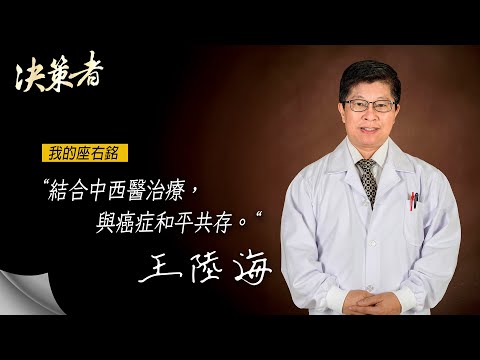
《決策者》中國醫藥大學副校長王陸海座右銘 影片縮圖
《決策者》幕後金句 · 2025Decision Maker Extra · 2025

院士的座右銘:結合中西醫治療,與癌症和平共存His Motto: Integrative Care — Coexisting with Cancer

節目番外短片:面對連續四十多年蟬聯國人十大死因榜首的癌症,王陸海副校長與觀眾分享自己的人生座右銘。A short extra from the show — facing a disease that has topped Taiwan's causes of death for over four decades, Vice President Wang shares his personal motto with viewers.

在 YouTube 觀看Watch on YouTube

更多影音:民視讚夯 YouTube 頻道 · 中國醫藥大學頻道 · 中國醫藥大學中醫學院頻道(影片為第三方平台公開內容,分別由民視與校方所有)More videos: FTV Thumbs Up · China Medical University · CMU College of Chinese Medicine (public third-party content owned by FTV and CMU)

動態News

近期動態與演講Recent News & Talks

2025-10

人源化 CD24 抗體 HH0146 榮獲「2025 未來科技獎」Humanized CD24 antibody HH0146 receives the 2025 Future Tech Award

王陸海講座教授科研團隊研發之「治療性人源化 CD24 單株抗體應用於三陰性乳癌的精準免疫標靶治療」,榮獲 2025 未來科技獎,並獲國科會推薦為本屆重點推廣之亮點技術;技術團隊成員包含中國醫藥大學中醫學系詹世萱助理教授等。The team's “Therapeutic humanized CD24 monoclonal antibody for precision immune-targeted therapy of triple-negative breast cancer” received the 2025 Future Tech Award and was recommended by NSTC as a featured highlight technology. Team members include Assistant Professor Shih-Hsuan Chan of CMU's Department of Chinese Medicine, among others.

2025-04

《決策者》專訪:「中醫藥是癌症治療的關鍵拼圖」Interview with Decision Maker: “Chinese medicine is a key piece of the cancer-treatment puzzle”

中醫藥研究中心主任王陸海副校長談中西醫抗癌與新藥開發。Director Wang discusses integrative Chinese-Western anticancer research and new drug development.

2023-03-29

國立中國醫藥研究所演講:草藥在克服化療抗藥與復發中的角色Talk at NRICM: Overcome the challenge of cancer chemo resistance and recurrence — the role of herbal medicine

2022-11

中藥複方「赫保康(HBK)」完成技術授權予維麗康生技Botanical formula Herbao-Kang (HBK) licensed to Wilikon Biotech

跨領域團隊研發之無毒植物複方 HBK,於小鼠肺癌模型中證實可增加拮抗腫瘤的免疫細胞,抑制腫瘤生長、轉移與復發;完成技術授權,以可天天服用的無毒保健食品形式落實產業應用,作為癌症患者輔助調養的新選擇。The non-toxic botanical formula HBK was shown in mouse lung-cancer models to increase tumor-antagonizing immune cells and suppress tumor growth, metastasis and recurrence. The technology was licensed to Wilikon Biotech and commercialized as a non-toxic daily health supplement, offering a new adjunct option for cancer patients.

2021-02-04

中山大學演講:CTH 促進前列腺癌進展與轉移Talk at NSYSU: CTH promotes prostate cancer progression and metastasis (H₂S / NF-κB / PKM2 axis)

聯絡Contact

聯絡資訊Contact Information

秘書Secretary
  
中國醫藥大學校長室Office of the President, China Medical University